
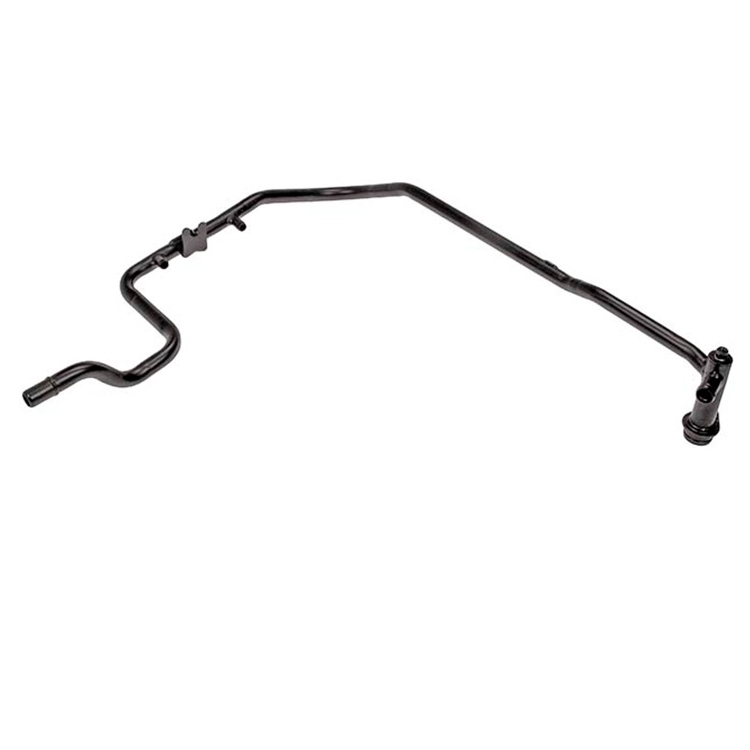
In a significant advancement for the automotive manufacturing sector, a newly developed aluminum transition elbow is set to revolutionize piping systems by improving durability, efficiency, and compatibility. This innovative fitting addresses a critical need in automotive piping assemblies, particularly in systems where materials with differing properties must be seamlessly joined without compromising performance.
### Advancing Automotive Piping with Aluminum Transition Elbow
Automotive systems often require the integration of various piping materials to meet demanding operational requirements such as heat resistance, corrosion protection, and flexibility. Traditional joints and fittings, when connecting pipes made of different metals, tend to face challenges including galvanic corrosion, mechanical stress, and reduced service life. The aluminum transition elbow is engineered to counter these issues by providing a robust, lightweight, and corrosion-resistant solution that ensures optimal connectivity between dissimilar pipes.
The transition elbow's design capitalizes on aluminum’s excellent corrosion resistance and lightweight properties, making it an ideal candidate for automotive applications where weight reduction directly correlates with improved fuel efficiency and vehicle performance.
### Company Expertise and Commitment to Innovation
The manufacturer behind this pioneering aluminum transition elbow has long been a stalwart in the automotive components industry, specializing in the development and production of automotive stainless steel bellows assemblies and metal pipe fittings. With a steadfast commitment to innovation and quality, the company seeks to establish itself as a leading manufacturer of automotive stainless steel bellows fittings and assemblies, as well as a comprehensive system service solution provider.
Leveraging its extensive expertise, the company has integrated advanced material science and precision engineering to develop the aluminum transition elbow, ensuring it meets rigorous automotive industry standards. Their dedication to quality control and continuous improvement guarantees that each fitting not only fits seamlessly but also delivers reliable performance under extreme conditions.
### Addressing Industry Challenges and Market Needs
Automotive manufacturers are continuously seeking ways to enhance vehicle reliability and efficiency while reducing production costs and environmental impact. In this context, the aluminum transition elbow offers several pivotal advantages:
1. **Material Compatibility:** Facilitates the connection of stainless steel and aluminum piping without causing galvanic corrosion, a common problem when mixing metals in fluid transport systems.
2. **Weight Reduction:** Aluminum is significantly lighter than stainless steel, contributing to overall vehicle weight reduction, which is critical in lowering fuel consumption and emissions.
3. **Durability and Flexibility:** The design of the elbow incorporates precise manufacturing techniques to provide excellent mechanical strength and flexibility, improving system resilience.
4. **Ease of Assembly:** The elbow is engineered for straightforward integration into existing piping networks, helping manufacturers streamline assembly processes and reduce labor costs.
### Industry Impact and Future Prospects
The introduction of this aluminum transition elbow is poised to benefit not only automotive OEMs but also aftermarket service providers by offering a reliable solution to complex piping challenges. The company’s strong background in stainless steel bellows assemblies complements this innovation, as both products aim to enhance overall system performance and longevity.
Furthermore, the company’s vision of becoming a leading system service solution provider aligns with the evolving needs of the automotive industry, which increasingly demands integrated, high-quality components capable of supporting emerging technologies such as electric vehicles (EVs) and advanced fuel systems.
### Commitment to Sustainable Manufacturing
In addition to product innovation, the company places a strong emphasis on sustainable manufacturing practices. By utilizing recyclable materials such as aluminum and optimizing production processes to reduce waste and energy consumption, the company actively contributes to environmental conservation efforts.
### Conclusion
The launch of the aluminum transition elbow is a testament to the manufacturer’s expertise, innovative spirit, and commitment to meeting the automotive industry’s dynamic needs. As a trusted developer and manufacturer of stainless steel bellows assemblies and metal pipe fittings, the company continues to push boundaries by delivering advanced products that improve vehicle performance, durability, and efficiency.
This advancement underscores the importance of ongoing research and development in automotive component manufacturing and positions the company as a key player in providing comprehensive system solutions that drive the future of automotive technology. The aluminum transition elbow is more than a product—it's a strategic innovation paving the way for safer, lighter, and more efficient automotive systems worldwide.